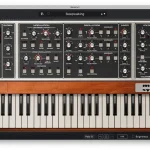
When Arturia launched the MicroFreak back in 2019, it established an unusual precedent for budget hardware. Instead of abandoning a sub-$350 synth after its initial sales cycle, the French company pushed five major firmware revisions over four years. They added vocoding, user wavetables, sample playback, and granular processing, stretching the little hybrid well beyond its original design brief. Eventually, though, engineering reality collided with physical silicon. By firmware 5.0, the MicroFreak’s internal STM32 flash memory hit a hard ceiling. Official feature development stalled, leaving owners assuming the quirky capacitive-touch instrument had run its course.
The community had other ideas. Over the past few weeks, two separate independent development efforts—SuperFreaker and FreakSwap—arrived to crack the instrument wide open. Rather than accepting factory boundaries, these rogue patchers dismantle the official Arturia MicroFreak firmware to squeeze unreleased capabilities out of the hardware.
Call it the right-to-repair movement’s noisier cousin. Across the music tech world, musicians are treating digital hardware less like sealed appliances and more like open platforms waiting for community teardowns. We recently saw this exact impulse take hold when the Modded:Cycles project on the Model:Cycles bypassed Elektron’s factory code to shoehorn Syntakt machines and multi-channel USB streaming into an entry-level groovebox. At the same time, initiatives like The Usual Suspects’ bit-accurate DSP project and Monomodule’s binary audit have shown what happens when producers stop treating embedded code as proprietary secrets. If a manufacturer runs out of road, hackers pick up the hex editor.

Scavenging Dead Code: What SuperFreaker Actually Delivers
The first project, SuperFreaker, comes from Freakier Firmware Labs, an independent research outfit run by developer Zach in Asheville, North Carolina. Faced with a microcontroller that Arturia engineers declared completely full, SuperFreaker took a crowbar to the official 5.0.0.2084 firmware binary.
The strategy was straightforward: find what the factory left behind. By auditing the compiled code, Zach identified and stripped out dormant factory test routines, leftover debugging instructions, and unused serial console commands. That reclaimed just enough program space to inject what MicroFreak owners have begged for since day one: onboard effects.
At the top of the wishlist was always an onboard delay. Zach squeezed in a dedicated mono tape echo with four selectable modes: echo, plate reverb, reverse playback, and infinite hold, complete with simulated tape wobble and feedback saturation. Alongside the echo, the patcher introduces internal drive and lo-fi bitcrush stages, an analog-style wavefolder, a sub-octave square wave, and an independent tremolo engine.
Beyond raw audio processing, SuperFreaker tackles persistent workflow irritations that lingered throughout earlier official firmware updates. The main envelope finally gains an independent release stage on Shift plus Decay, decoupling release tails from decay times. You also get true 303-style legato glide, per-preset output volume normalization, keyboard semitone transposition, and an optional 7 dB boost to clean up the notoriously quiet headphone jack.

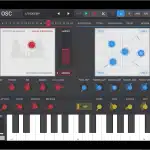
For hands-on testing without hardware anxiety, the lab built a fully playable 3D browser simulation of the synth with twenty interactive lessons. You can audition every shortcut and tweak the modified engine on your computer before touching your actual instrument.
FreakSwap And The Return To Mutable Roots
While SuperFreaker focuses on effects and utility housekeeping, the second project takes direct aim at the oscillator core. FreakSwap, created by open-source developer doriamxyz, addresses the MicroFreak’s memory wall through targeted engine replacement.
When Arturia originally designed the synthesizer, its open-source foundation came directly from Émilie Gillet’s iconic Mutable Instruments Plaits Eurorack module. Because onboard storage was finite, Arturia could only license and implement a curated selection of those algorithms.

FreakSwap operates as a client-side web utility that lets musicians swap any single factory sound engine for one of 11 alternate Plaits models that never made the factory cut. Across 38 individual configuration recipes, users can ditch an engine they never touch—such as the vocoder or basic virtual analog—and substitute complex formant synthesis, physical modeling, speech algorithms, or harmonic string models.
Like SuperFreaker, FreakSwap avoids legal complications by refusing to host or distribute copyrighted Arturia binaries. You supply your own legitimate firmware file directly from your hard drive. The browser patches the binary locally using client-side scripts, then spits out a modified `.mff` update file ready for transfer.
The Backlash, UI Friction, And The Bricking Risk
Neither project arrived without friction. Early reporting on the web claimed SuperFreaker was launching with a paywalled “pro” tier. That was accurate for about forty-eight hours: early teaser pages experimented with paid feature packs. But when the concept hit Reddit’s r/MicroFreak community, users pushed back hard.
The reaction was unambiguous: charging money for binary diffs applied to copyrighted manufacturer code crossed an ethical line for many synth players. The developers listened. Both SuperFreaker and FreakSwap abandoned their commercial plans, pivoting to completely free, open betas funded strictly by voluntary coffee donations.
Before anyone rushes to plug in a USB cable, there are practical studio realities to keep in mind.
The biggest day-to-day hurdle is interface ergonomics. The Arturia MicroFreak was physically engineered around a dedicated control layout. It possesses zero knobs labeled “Echo Mix,” “Wavefold,” or “Engine Bank B.” SuperFreaker forces you to memorize a dense web of Shift-presses, secondary encoder taps, and cryptic OLED abbreviations. Toggling delay feedback mid-performance using the cycling envelope knobs requires muscle memory that feels clumsy compared to dedicated hardware controls.
With FreakSwap, the friction is organizational. If you replace the stock wavetable engine with a Plaits speech synthesizer, every factory preset that previously relied on that wavetable slot will suddenly load with wrong parameters and erratic timbres.
Finally, there is the ever-present danger of a hard brick. While both patchers utilize Arturia’s official MIDI Control Center software in bootloader fallback mode to push updates, neither tool carries factory authorization. If a corrupted flash ruins an EEPROM table or damages the bootloader, Arturia will not repair your circuit board under warranty. Both developers explicitly caution users to run full preset backups and rehearse recovery procedures before flashing.
The Bigger Picture
Despite those caveats, the arrival of SuperFreaker and FreakSwap reflects a welcome shift in hardware culture. For years, digital synths were treated as closed consumer appliances: you bought what was in the box, waited for an annual factory bug fix, and eventually replaced the unit when the manufacturer moved on.
These projects dismantle that passivity. By combining in-browser patching tools, binary disassembly, and open-source DSP heritage, independent developers are proving that cheap hardware has far more mileage left in its components than corporate roadmaps suggest. Flashing unofficial code will always remain a calculated gamble, but for adventurous owners willing to risk their warranty, the Arturia MicroFreak just became one of the most unpredictable experiments on the market.
Pricing and Availability
Both firmware modification utilities are available right now as free public betas.
SuperFreaker can be configured and patched directly via Freakier Firmware, where users can also access the 3D browser simulator and hardware recovery documentation. Donations can be made through the project’s support link.
FreakSwap is available through its browser interface hosted on GitHub Pages, with full source code and replacement catalog recipes accessible on the developer’s public repository.
Flashing either modification requires an official copy of Arturia MicroFreak firmware version 5.0.0.2084 and the free Arturia MIDI Control Center utility running on macOS or Windows.