

Arturia launched the MiniFreak in early 2023 as a six-voice polyphonic hybrid with an unusually wide oscillator engine roster and a companion plugin thrown in at no extra cost. The firmware roadmap since then has been one of the more credible arguments for buying hardware in this price range: wavetable synthesis landed in 2.0, the full granular suite arrived with 3.0 in December 2024, vocoder functionality followed in 4.0 last June. Now 5.0 delivers the feature the community has been asking for since launch — custom sample and wavetable import, free, for everyone who already owns it.
That matters, because a lot of people already own it.
The Import Pipeline
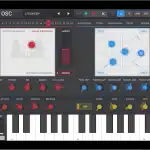
The workflow runs through MiniFreak V, Arturia’s software twin of the hardware. Drag a file onto an engine slot, or hit the Import button — the plugin handles conversion and pushes the result to the synth over USB. No third-party tools, no terminal commands, no firmware folder spelunking. Before this update, the community was relying on unofficial utilities that worked but were fragile. Arturia has closed that gap with a supported, stable pipeline.

File support covers WAV, AIFF, and FLAC. Samples convert to 12-bit / 32 kHz, with a six-second ceiling. Wavetables get a cleaner path: 24-bit / 512 points, mono only. Those numbers are worth understanding before you dive in.
What 12-Bit / 32 kHz Actually Means
Twelve-bit. That lands you squarely in SP-1200 and early Akai territory — the machines that built lo-fi hip-hop, jungle, and classic breaks not despite their technical limitations but because of them. Drop a pristine 48 kHz vocal into MiniFreak V and what comes back is grainier, chewier, and often more interesting. Push that through Cloud Grains or Particles and you’re shaping bit-crushed artifacts into textures that are genuinely difficult to fake from scratch inside a plugin.
The six-second limit is tighter. Percussive hits, short phrases, granular fodder — fine. Multi-bar loops or longer ambient beds will need trimming. Use Skan or Lick to navigate sliced material if you’re running up against it.

The wavetable path is more straightforward. The 24-bit / 512-point format matches what Arturia’s own Pigments synthesizer uses, so any Pigments-compatible third-party wavetable library transfers over with no conversion prep. The mono-only requirement is the one catch — stereo wavetable packs need a bounce-to-mono pass first, which isn’t advertised.

The Engine Roster, Revisited
The MiniFreak now counts 31 oscillator engine types across its two independent digital oscillator slots. Starting from 22 at launch, the firmware updates since have pushed that number up considerably: the granular suite (Cloud Grains, Hit Grains, Frozen, Particles, Skan, Lick, Raster, Sample), the Wavetable engine, Karplus-Strong physical modelling, Modal, Speech/formant, additive Harm, two-operator FM, Superwave, Noise, and the foundational BasicWaves modes. That’s a genuinely unusual breadth for a €499 synth, and it didn’t come at launch.
Firmware 5.0 doesn’t add new engine types. It feeds the existing engines with user-supplied material — which, depending on your workflow, is the more useful move. Karplus-Strong plucking a custom clave recording. Cloud Grains atomizing a vocal recorded in your bathroom. The Frozen engine holding a field recording indefinitely and letting you play it polyphonically across the keyboard. The architecture was always built for this; the door is now open.
One Setup Note
Import requires a computer in the loop — samples and wavetables go through MiniFreak V, not a USB stick or SD card. Once they’re on the hardware, they live there; you’re not streaming. A handful of early adopters reported slow preset loading post-update, resolved with a firmware reset. Worth being aware of on day one.
The New Factory Bank
Twenty-three presets ship with 5.0, from Martin Rabiller, Lily Jordy, and Marius Rabin. They’re structured to demo the import engines across different contexts — which makes them useful as reference points for your own sound design, not just playable content.
Bubblegum Air (Rabiller) leans into the downsampled character of the sample engine for a soft, slightly degraded lofi pad texture.
Frame Lead (also Rabiller) goes the opposite direction — sample-derived material as the backbone of a hard-edged lead.
Glitter Guard Insectoid (Rabin) is the outlier: percussive, alien, somewhere between prepared piano and a confused ROMpler. It’s the kind of preset the MiniFreak has always been good at and that nobody else quite nails.
Forest Ground (Jordy) is the ambient one to watch — slowly morphing pad territory that shows what granular processing of recorded environments can do that pure synthesis has to work harder to reach.
Pricing and Availability
Firmware 5.0 is a free update for all MiniFreak hardware owners, applied via the MiniFreak V software. If you own the hardware, you already have access. The Arturia MiniFreak retails at €499 / $499; the standalone MiniFreak V plugin for non-hardware users is €99 / $99, and it supports the full import workflow as well.
Full details at arturia.com.
And speaking of Arturia and the MiniFreak family — there’s more to come. Stay tuned.