RØDE had a busy few weeks. The headline is RØDECaster Video 1.4, a free firmware update that adds a 4K capture mode to the whole video range. Around it sit two new boom arms, the DS3 and the LPA1. Different products, same pitch: more capable gear for the creator who films and records in the same room.
RØDECaster Video 1.4: 4K Capture Mode, With Strings
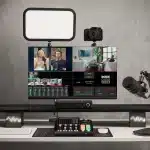
RØDECaster Video 1.4 lands on the RØDECaster Video, Video S and RØDECaster Video Core at no cost. The big addition is 4K Capture Mode, which turns each console into a UHD (3840×2160) capture and distribution box rather than a switcher.
Plug in multiple HDMI cameras (four on the RØDECaster Video, three on the Video S and Core) at UHD30. Each feed goes out as its own NDI stream, ready for OBS, Ecamm Live or anything else on your network that speaks NDI. At the same time, every source can be recorded as an isolated track to an external SSD in H.264 or H.265. Editors get clean, independent files instead of a baked-in switch.

Now the catch. To free up the processing for 4K, RØDE strips back much of what made these consoles interesting in the first place. Many of the switching, scene arrangement, keying and media options are reduced or simplified in this mode. Anyone hoping to live-switch a polished 4K show on the box will be disappointed. This is a capture appliance, not a 4K switcher, and RØDE is fairly upfront about that. Everything remains available in the standard FHD Switching mode, so it’s a mode change rather than a loss.
There’s also a Full HD Capture Mode for people who care more about a smooth 60fps across multiple 1080p feeds than raw resolution. Both capture modes keep the full RØDE audio mixer running, and each NDI output can carry its own custom mix. That’s the genuinely useful bit for multi-camera podcasts and interviews.
RØDECaster Sync Reaches the Whole Family
The second major piece is RØDECaster Sync. It debuted on the Video Core, and I covered the idea in our Video Core and Sync piece. With 1.4, the RØDECaster Video and Video S get it too.

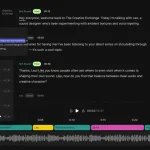
Sync links any of these consoles to a RØDECaster Pro II or Duo with a single USB-C cable. The audio desk becomes a physical control surface for both machines: faders, mute and listen buttons, SMART pads and the touchscreen handle audio and video alike. A new Video SMART Pad type puts switching, scenes, media, overlays and auto-switching under your fingers. The two units share a single nine-channel mixer, drawn from any input on either, and everything records to the video console’s drive.
If you already own a Pro II next to a Video S, this is a free upgrade that makes the pair feel like one product. If you don’t, it’s another reason RØDE is quietly building an ecosystem you buy into piece by piece.

Other Changes in 1.4
The family can now export timeline information as OTIO files for Adobe Premiere Pro, joining the DaVinci Resolve EDL export from version 1.3. That lets editors rebuild a multi-camera show in the NLE and make fine adjustments. The consoles also accept audio from any compatible USB webcam, and the RØDECaster App’s Scene Builder gets keyboard shortcuts, so a computer keyboard doubles as a switching surface.
RØDE DS3: A Heavier Desktop Arm
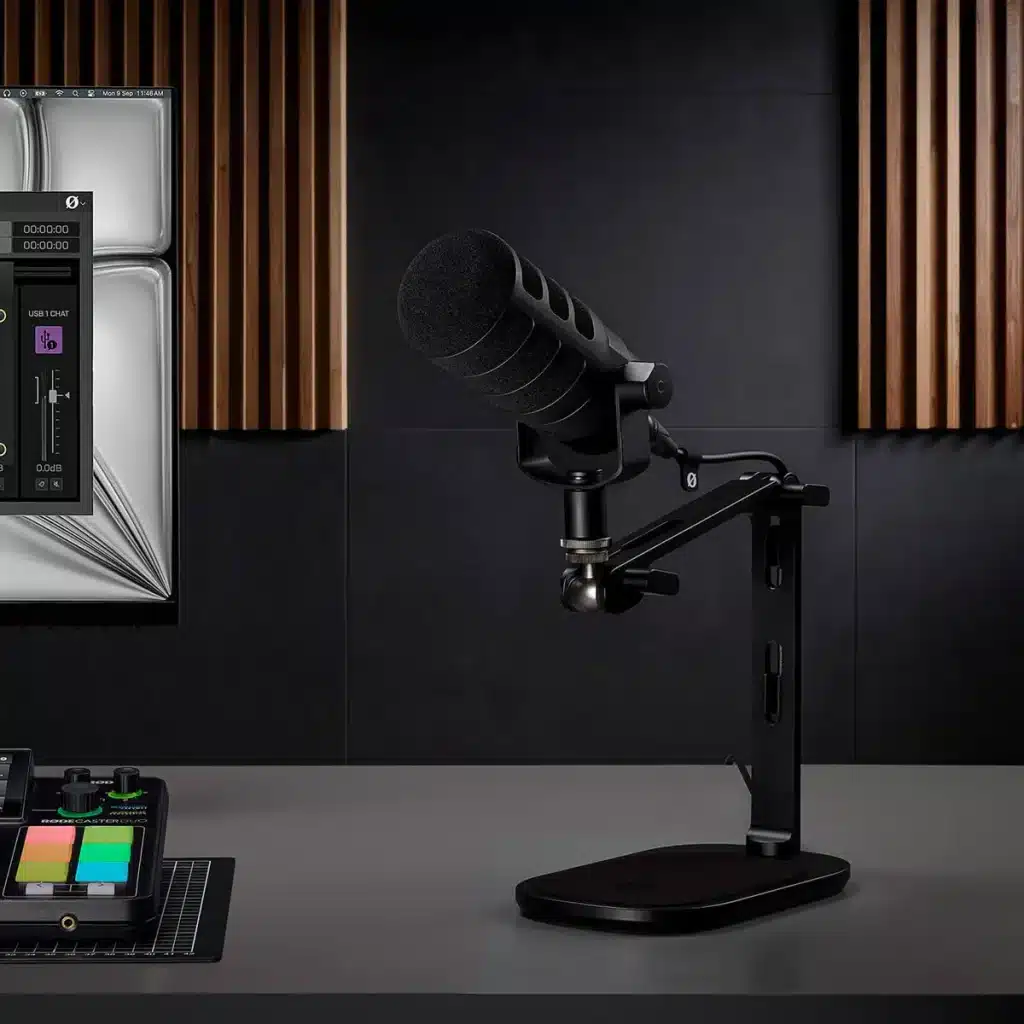
On the hardware side, RØDE introduced the DS3 on 25 August, the follow-up to the DS2 desktop studio arm. The RØDE DS3 raises payload to 1.5kg, enough for broadcast XLR mics like the PodMic as well as large-diaphragm mics, cameras and lights.
An integrated ball head allows quiet, controlled positioning, and a central lock secures the angle in one motion. Like the DS2, it ditches the desk clamp for a weighted base, so you can park it anywhere on a flat surface. The base is redesigned for stability with heavier loads while keeping a compact footprint. Each finish has its own isolation pad: soft-touch silicone on the Classic Black, natural cork on the Crisp White. Cable clips keep XLR and USB runs tidy, and 3/8″, 1/4″ and 5/8″ thread adaptors are in the box.
The trade-off of any weighted base is simple: it takes desk space and can’t swing out over an edge the way a clamped arm can. Weight is also the point, so that’s the deal you’re signing up for.
RØDE LPA1: A Low-Profile Arm for Video Setups
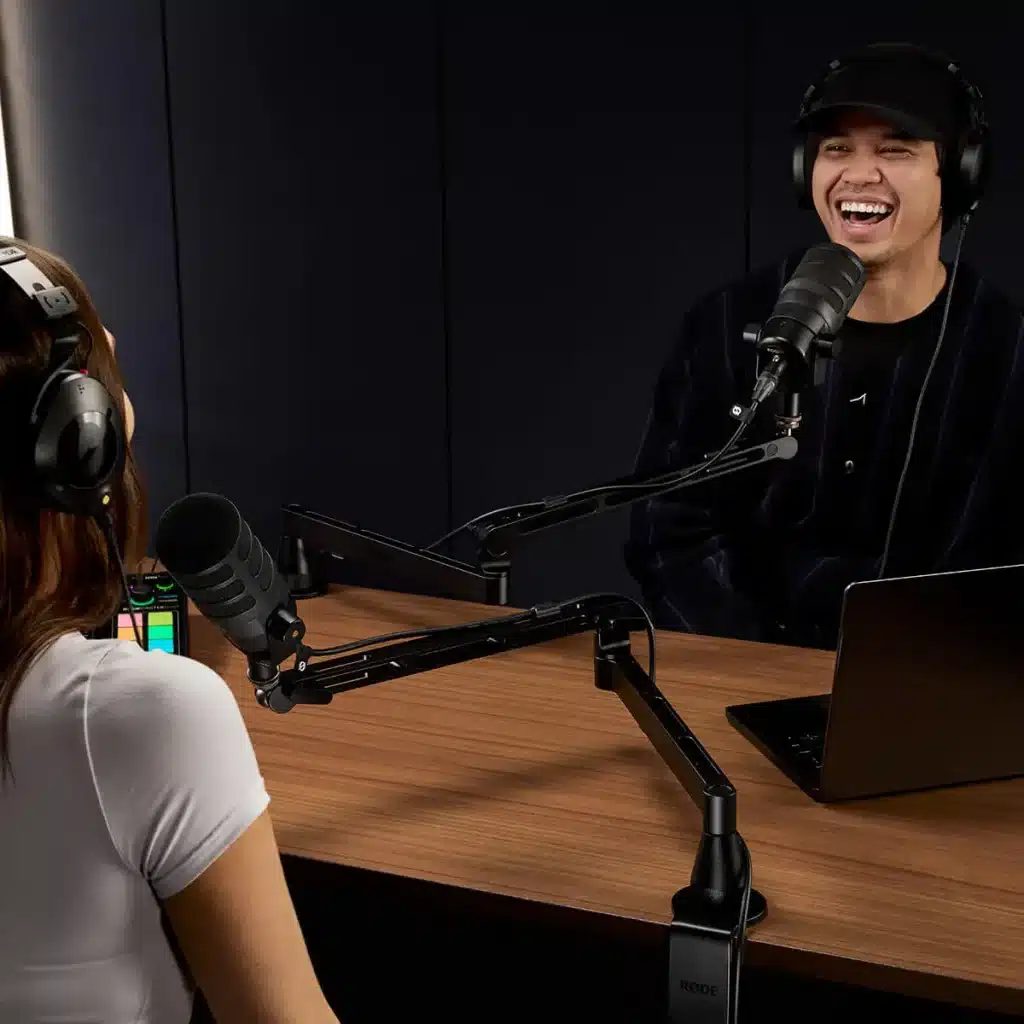
Then there’s the RØDE LPA1, announced 29 September. It’s a low-profile studio arm designed to sit below the camera’s line of sight. That matters for video podcasts and streams where a boom arm hanging in frame is an eyesore.
The 2kg payload makes it RØDE’s highest-capacity studio arm, handling the PodMic, PodMic USB, Procaster, Broadcaster and even large-diaphragm condensers like the NT1 range. Construction is all-metal. Horizontal reach is 750mm, with 90° up and 60° down vertical adjustment, 360-degree arm articulation and a ball-mount design. Cable management runs along the arm. Unlike the DS3, the LPA1 clamps to desks up to 70mm thick, and 1/4″, 3/8″ and 5/8″ threads are covered.
Put the two arms side by side and the split is clear. The DS3 is the desk-anywhere option, the LPA1 is the one for people who actually care what the camera sees.
Pricing and Availability
RØDECaster Video 1.4 is available now as a free update for the RØDECaster Video, RØDECaster Video S and RØDECaster Video Core. More at rode.com.
The RØDE DS3 is available now in black for US$109, shipping worldwide, with the white finish coming soon. Details at rode.com/products/ds3.
The RØDE LPA1 is available now in black for US$139, shipping worldwide, with a white edition coming soon. Details at rode.com/products/lpa1.