I’ve been wrestling with room acoustics in my home studio for years, cycling through reflection filters, foam panels, and every DIY hack imaginable. When Isovox launched the GO as a more accessible alternative to their flagship Isovox 2, I was skeptical. Another portable booth promising studio acoustics? I’d heard it all before. But after spending serious time with this thing, I’m convinced it’s solving a problem that smaller, cheaper solutions simply can’t touch.
What Actually Is This Thing?
The Isovox GO is a lightweight, foldable vocal booth that creates an isolated acoustic environment around your microphone and head while recording. Unlike reflection filters that only address rear reflections, or foam balls that can sound boxy and colored, the GO fully encloses your recording space. The company claims it’s three times more effective at killing room sound than traditional reflection filters based on RT60 measurements, and honestly, my ears agree.
What sets it apart from the bigger Isovox 2 is the focus. This isn’t designed for belting out power ballads at 2 AM without disturbing your neighbors. The sound isolation for your surroundings is around -10dB—helpful, but not soundproofing. The GO is laser-focused on one job: giving you dry, studio-quality vocal recordings in acoustically compromised spaces. If you need serious external isolation for loud vocal practice, the Isovox 2 remains the better choice at the expense of portability and an extra $250.
Setup and Portability: Five Minutes, No Sweat
Just so you know, I’m not exactly a DIY person, but I’ve assembled enough “portable” studio gear to know that term gets thrown around loosely. The GO actually lives up to it. Out of the included carry bag, I had it fully assembled and ready to record in under five minutes using the tripod floor stand that comes in the box. At 18 pounds (8 kg) including the stand, it’s portable enough that I’ve brought it to three different recording locations without developing a hernia.

The foldable design fits into what’s essentially a carry-on sized bag, which has been invaluable for mobile recording sessions. I recently used it in a hotel room with terrible acoustics—parallel walls, hard surfaces everywhere—and the difference was night and day. When assembled, the booth measures roughly 27 x 19 x 17 inches (68 x 48 x 44 cm), sitting on a stand that adjusts from 33 to 65 inches. I’m 5’7″ (1,7 m) and the height works perfectly; taller folks beyond 6’5″ (1,95 m) might need to record sitting down.

The Sound: Where Chemistry Meets Physics
Working on the Isovox GO review, this is where the product impressed me most. The contoured material design, derived from the Isovox 2’s four-layer acoustic approach but simplified, delivers a noticeably dry and crisp vocal sound. What struck me immediately was the bass response—it stays intact without the muddy, resonant character I’ve experienced with cheaper solutions.
I did extensive A/B tests in my own less-than-ideal space: an untreated oddly-shaped room, with flutter echo problems and prominent room modes around 120Hz. Recording without any treatment picked up all that ugliness. Adding my old reflection filter helped, but reflections from the sides and floor still bled through. With the GO, those room reflections just vanished. The vocal sits in the mix without needing aggressive high-pass filtering or surgical EQ to remove boxiness.
The included Isoplug GO software plugin (downloadable here – it requires the license key you’ll find in the bag) offers single-knob processing with de-esser, dynamics, tone, and reverb. It’s not replacing my carefully crafted vocal chain, but for quick podcast work or demo recording, that simplicity is useful. I find myself using the de-esser more than expected—it’s surprisingly musical.
Phase or Filtering Issues?
I need to address something I’ve seen raised about portable vocal booths in general: comb filtering. This happens when sound reflections combine with the direct signal, creating phase cancellation at specific frequencies that can’t be fixed with EQ. I was concerned about this given the GO’s enclosed design.

In practice, I haven’t encountered noticeable comb filtering issues with the GO. The key seems to be the internal contour design and material selection—they’ve clearly thought about how sound behaves inside that space. That said, mic placement matters. I found keeping the capsule centered and at proper distance from the interior surfaces crucial. Rush the setup and position things carelessly, and you might introduce problems.
It’s worth noting this is where the GO differs from something like the Kaotica Eyeball, which some users report can add a low-mid bump and occasionally introduce phase issues depending on the mic used. The GO’s larger internal volume and more sophisticated acoustic treatment seem to mitigate these concerns better.

What It Excels At (And What It Doesn’t Do)
While working on this Isovox GO review, the booth has become essential for my voice-over work, podcast recording, and vocal tracking—both demos and finals. If you’re moving between locations constantly, recording in untreated rooms, or just lack space for permanent acoustic treatment, this is a real problem-solver. I maintain consistent sound quality whether I’m recording at home, in a temporary workspace, or on location, which matters when clients expect professional results regardless of where I am.
What it won’t do is let me rehearse aggressive rock vocals without my neighbors hearing. That -10dB sound reduction helps with quieter work, but this is acoustic treatment, not soundproofing. Manage expectations accordingly. For isolation practice, the Isovox 2 or a proper constructed booth remains necessary.
Microphone Compatibility: Mostly Straightforward
The GO includes a flexible mic mount and mic pole with standard 5/8″ threading, accommodating most tube-shaped condenser mics without issue. Just to mention a few popular mics, the Neumann TLM 103, Audio-Technica AT4040, and Rode NT1all fit perfectly with the included flex mount. You’ll find a much longer list on the product’s web page.
However, side-address mics like the SM7B or Electro-Voice RE20 require Isovox’s optional horizontal mic mount accessory, which feels like it should’ve been included at this price point. Minor gripe, but worth noting if those are your primary microphones.
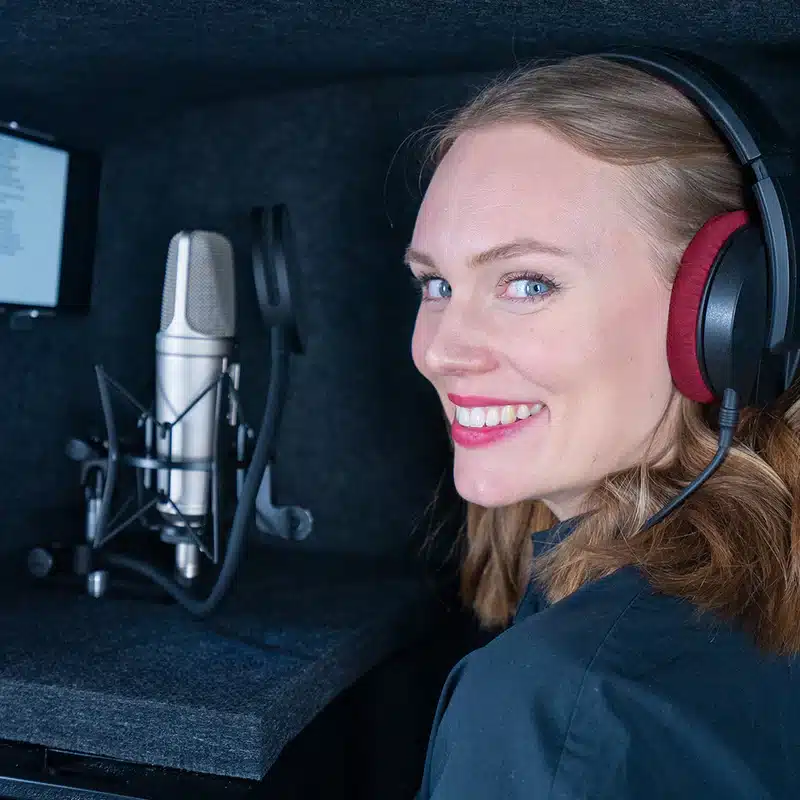
The interior space is relatively generous—I never felt claustrophobic. The extended body cut-outs let me move quite naturally while performing (well, I don’t mean dancing, you know!), which matters more than people realize. Uncomfortable performers give stiff takes, and I appreciate that Isovox considered this.
Worth knowing: the top end of the mic pole inside ISOVOX 2 is 5/8″ – 27. To mount an alternative mic mount such as shockmounts, mic-clips or similar you need a female 5/8″ -> Male 3/4″ adaptor, these can be found at music instrument stores. According to the company, the recommended adapter is the K&M 216 Thread adapter.
Pricing and How It Stacks Against the Competition
Isovox exclusively sells via dealers and distributors, so you might find some variations in the pricing. The Isovox GO typically retails for $749 USD, €729 EUR, or £649 GBP, but significant discounts are occasionally available through select retailers, with prices sometimes dropping as low as €449 (as of now, October 2025, on Thomann).
The GO occupies interesting territory. Basic reflection filters like the sE Electronics RF-X cost $100-150 and help with direct rear reflections, but they’re nowhere near as comprehensive. The Kaotica Eyeball at $200 is more portable but has mixed reports regarding sound coloration and can feel claustrophobic. On the high end, the Isovox 2 at $999 delivers better isolation and more pristine acoustics, but it’s heavier, larger, and more expensive.
Other options like ClearSonic’s IsoPac (table) systems offer decent value around $400-600 but require more setup space and aren’t truly portable. The GO doesn’t really have a direct competitor matching its combination of acoustic performance, true portability, and ease of use at this price. That’s either smart positioning or actual innovation—probably both.
Who Should Buy This?
If you’re recording vocals in less-than-ideal spaces and you’ve maxed out what foam panels and reflection filters can do, the Isovox GO deserves serious consideration. It’s particularly valuable for mobile recording, home studios in small apartments, or anyone working in different locations regularly.
The price seems steep compared to a $150 reflection filter, but if you’ve spent hours trying to EQ out room reflections or felt limited by where you can record, that cost starts making sense. Voice actors, traveling musicians, content creators, and project studio owners will find the most value here.
What you’re paying for is consistency. Getting the same dry, professional vocal sound whether I’m in my treated space, a hotel room, or someone else’s studio has real value when you’re working professionally. It speeds up workflow, improves final results, and eliminates the acoustic lottery of location recording.
Isovox GO Review – Final Thoughts
The Isovox GO isn’t perfect—It’d be nice to have even better sound isolation, and that horizontal mic mount should be standard—but it solves a real problem elegantly. It’s not trying to be everything, which is exactly why it succeeds at what it does.
For anyone serious about vocal recording quality while working within modern constraints—limited space, frequent travel, imperfect rooms—this is the most practical solution I’ve used. It’s not cheap, but it’s considerably cheaper than building a proper vocal booth or renting studio time repeatedly. And unlike acoustic treatment that stays behind when you move, this travels with you.
The GO represents intelligent compromise: not as isolated as the Isovox 2, but far more practical (and affordable) for most working situations. Sometimes the middle path is exactly right.
Check out the official Isovox GO product page to learn more.