Virtual 500-series lunchboxes usually force an uncomfortable compromise. You get the tactile satisfaction of assembling custom channel strips inside a single window, but you surrender the precise visual feedback modern digital production demands. Equalization suffers worst in this format. Trying to carve surgical notches or balance stereo imaging on tiny vertical faux-hardware knobs feels like mixing through a keyhole.
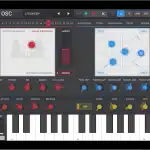
Pine DSP tackles that structural limitation head-on with Blox Rack. Designed as a modular effects host loaded with nine slots and six dedicated processors, the plugin splits its interface between a traditional vertical module bay and a context-sensitive horizontal drawer. That upper panel unfolds a full-width Mid/Side EQ, ducking envelopes, and modulation routing, combining hardware modularity with modern graphic displays.

Modular Architecture With One-Click Parallel Paths
At its foundation, Blox Rack provides nine slots ready to host any combination of its six core processors: EQ, Comp, Chorus, Reverb, Delay, and Exciter. Modules duplicate freely with an Option-drag gesture, making multi-stage serial compression or dual-stage tone shaping simple to assemble without burning extra track inserts.
Routing avoids the tedious virtual patch cables common to modular software. Instead, a simple “P” toggle between adjacent modules flips serial processing into parallel paths. You can isolate a compressor and delay alongside a bone-dry signal, or split three modules across a drum bus for instant New York-style parallel crush.

This modular approach enters territory established by virtual channel strips like IK Multimedia Mixbox, but Blox Rack focuses heavily on modern digital agility rather than strict vintage skeuomorphism. Rearranging your signal chain will not wreck your mix automation either. Pine DSP routes parameter automation through 20 dedicated host slots; drag a module to a different position in the rack, and your DAW automation follows the processor rather than the physical slot number.

The Horizontal EQ Drawer And Dynamic Ducking
The smartest ergonomic shift here is the top utility bar. Clicking the Blox EQ module brings up a full-width graphical parametric display across the top of the interface. Rather than turning tiny virtual potentiometers, you drag nodes directly over a real-time analyzer, scroll the mouse wheel to tweak Q values, toggle band soloing, and flip any band between stereo and Mid/Side modes.
Dynamic ducking gets similar visual treatment. Both Blox Delay and Blox Reverb include built-in ducking controls that automatically attenuate wet tails whenever fresh dry transients hit the input. The upper drawer houses a spectrogram alongside dedicated threshold, depth, attack, and release parameters, ensuring ambient wash clears out without requiring external sidechain routings.
Saturation duties fall to Blox Exciter, offering three distinct harmonic flavours: Reel, Glass, and Ember. Reel mode leans into analogue tape emulation with adjustable hysteresis and bias parameters, evoking the textural drive found in Universal Audio’s Verve Analog Machines. Glass supplies sharper transistor grit, while Ember produces warm valve-like coloration. An integrated Air control polishes top-end sheen while preserving transient punch.
Modulation Matrix And Standalone DAW Deployments
Modulation extends well past static rack effects. Four independent LFOs (featuring phase invert and sample-and-hold random modes), an Envelope Follower, and a dedicated XY pad assign directly to almost any control via drag-and-drop. Six assignable macro knobs sit on the left cheek of the rack, mapped across more than 500 factory presets sorted by tags and multi-category filtering.
License holders also receive all six processors as standalone DAW plugins. If loading the full Pine DSP Blox Rack host feels like overkill for a quick drum fill delay or subtle vocal chorus, you can drop Blox Delay or Blox Chorus straight onto individual track inserts. Furthermore, the entire rack engine operates with zero latency, making tracking through dynamic modules or parallel chains viable without host compensation lag.
Pricing and Availability
Pine DSP Blox Rack is available now directly from Pine DSP at an introductory launch price of $49, discounted from its regular list price of $79.
Existing owners of standalone Blox plugins qualify for tiered loyalty discounts: $10 off Blox Rack for owning one single plugin, and $20 off for owning two. All purchases include a 14-day refund window.
Licensing relies on a simple account login rather than iLok or hardware dongles, permitting simultaneous activation on up to three personal machines with self-serve seat management. Blox Rack runs on macOS (13 Ventura or later, native Apple Silicon and Intel) with a dedicated installer for VST3, AU, and AAX. Windows users (10 or later, 64-bit VST3/AAX) currently receive a manual ZIP archive to drop into standard plugin directories while a dedicated installer remains in development.