As someone who’s been deep in Pigments since the early days, I have to say this latest update hits differently. Arturia addressed real workflow pain points and given the synth a fresh sonic edge. The new Rage, Ripple, and Reverb filters, the overhauled Play View, and the Corroder effect all feel like they came from actual studio feedback rather than a feature checklist. This is Pigments refined, sharpened, and ready for modern production demands.
What’s New in Pigments 7
Pigments 7 remains an all-in-one software synth that combines six synthesis types, deep modulation, studio-grade effects, and a generative sequencer inside a color-coded interface. Building on the foundation of Pigments 5’s audio input capability, this version focuses on making that engine feel more playable and more expressive, rather than tearing it down and rebuilding it.
The headline features include a revamped Play View with audio-reactive visual feedback, three new sound-shaping filters (Rage, Ripple, and Reverb), the new Corroder effect for focused degradation, sharper amplitude envelopes, 150 new factory presets plus 450 expansion presets, in-app sound design tutorials, and CPU optimizations.

New Filters: Rage, Ripple and Reverb
The new Rage filter is designed to inject raw bite and aggression into Pigments’ already flexible filter section. It leans into feedback and saturation, making it ideal for hard-edged leads, acid-style lines, and basses that need to cut through a dense mix. Pairing Rage with the sequencer or fast modulation on cutoff turns Pigments into a convincing acid and techno tool without external distortion.
Ripple operates more in the realm of phase shaping and bright transient detail. It can generate laser-like attack tones, shimmering highs, and ringing textures that sit well in modern electronic genres and sound design. Used subtly, it adds definition and movement; pushed harder, it delivers those sci-fi laser zaps and exaggerated transients.
The Reverb filter is the most unconventional of the three, effectively acting as a resonant, space-like filter that can do everything from metallic resonances to non-tonal sweeps. With high resonance and modulation of cutoff, it is suited to metallic timbres, morphing drones, and swooshing FX.
Corroder Effect and Tone Shaping
Corroder is a new effect module that focuses on controlled degradation. Instead of simply slamming the entire signal with bitcrushing or distortion, Corroder lets you apply degradation to a chosen frequency band so you can rough up the mids or highs while preserving the fundamental. This is particularly useful for lo-fi textures, modern hybrid bass design, and cinematic sound design where you want clarity and dirt in the same sound.

In combination with Pigments’ existing multi-band distortion, dynamics, and modulation capabilities, Corroder helps move the synth closer to a full sound-design workstation.
Play View Revamp
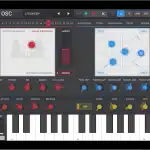
Pigments’ Play View has been completely redesigned to emphasize real-time interaction rather than deep parameter diving. It is now highly visual and audio-reactive, giving a clearer sense of how a preset behaves the moment a note is played. Key macro controls and performance-oriented parameters sit up front, while detailed editing remains only a click away.

This new approach is meant to help users quickly grasp the tone, timbre, and intention behind each preset. It is particularly helpful when browsing large libraries, since the visual feedback and macro-style controls make it easier to decide whether a sound fits a track without diving into every lane of modulation.
The Complexity Question
Pigments has always walked a line between being a visual, intuitive synth and a very deep instrument. With Pigments 7, that tension is more obvious. The added filters, Corroder, and expanded content make it an even more capable sound design platform, but the sheer number of engines, filter modes, effects, modulation slots, and pages can feel overwhelming, especially for new users or those coming from simpler hardware.
Some users experience what could be called decision fatigue, where the abundance of options leads to more time tweaking than actually finishing tracks. The large preset library also contributes: many patches sound spectacular in isolation but may be too complex, bright, or busy for mix-ready use, which can frustrate anyone looking for quick, simple bread-and-butter sounds.
This is where the revamped Play View and the tutorials matter. Used intentionally, they act as a buffer between the user and the full complexity of the engine. Play View encourages working with a smaller set of meaningful macros instead of every possible parameter, while the tutorials show practical workflows that cut through the noise.
Audio Improvements and Performance
Under the hood, Pigments 7 tightens up the amplitude envelope response to allow faster, more precise transients. This translates into punchier drums, sharper basses, and more controlled plucks, with fewer unwanted clicks when using fast attack and decay settings. Filter FM on the classic filter adds another dimension of motion and harmonic complexity.
CPU optimizations target heavy patches with stacked engines and multiple effects. In practice, that means fewer dropouts when playing complex presets or using Pigments as a centerpiece in a session.
New Content and Tutorials
Pigments 7 ships with 150 new factory presets and 450 expansion presets, designed to show off the new filters, Corroder, and workflow improvements. These are supported by 50 new wavetables, 30 samples, and 20 noise sources, expanding the raw material available for sound design.
The in-app tutorials are structured around real production use cases, guiding users through tasks like building a modern bass, designing evolving pads, or setting up reactive modulation. This is particularly useful for newer users who might otherwise feel intimidated by the synth’s depth.
Personal Take
Coming from earlier versions, the main difference in daily use is how much faster it is to get from an initial idea to a usable patch. The new filters give immediate sonic impact: Rage for aggression, Ripple for hyper-detailed highs, Reverb for textural and metallic material. Corroder slots in as a “make it more interesting” step without completely destroying the signal.
The complexity is still there, and it is still possible to vanish down the rabbit hole. But with Pigments 7, there is a clearer path for staying on the surface when needed, then diving deeper with purpose. For someone who enjoys sound design, that flexibility is the core appeal. Compared to competitors like Serum 2, Pigments offers more synthesis engines and a broader palette, though some may still prefer Serum’s streamlined wavetable workflow.
Pricing and Availability
Pigments 7 is a free update for all existing Pigments users via Arturia’s software management system. New users can purchase Pigments 7 at an introductory price of 99 USD/EUR until early January 2026, with a regular list price of 199 USD/EUR. The synth is also available at Plugin Boutique.
For more information, visit the official Arturia Pigments 7 product page.