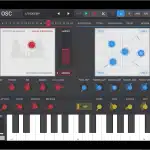
Spectrasonics has finally unveiled Omnisphere 3, the long-awaited successor to their flagship software synthesizer (see our Omnisphere 2 review). After seven years since the last major update (version 2.5 in 2018), this release packs thousands of new sounds, enhanced synthesis capabilities, 35 next-generation effects, and vastly expanded hardware integration.
Thousands of New Sounds, Zero Extra Drive Space
The factory collection now includes 18 curated libraries with thousands of fresh patches from the Spectrasonics Sound Design team. Among the unique new deep-sampled sound sources are Blown Ostrich Egg, Tonal Sand, Nyckelharpa, Celestaphone, Lyre Harp, Magic Wand Metallophones, Sul Tasto Cello, Percussive Snow, Piano Harmonics, and Tongue Slap Flute.
What’s remarkable is that despite this massive expansion, Omnisphere 3 takes up no more hard drive space than version 2, thanks to new lossless optimization technology. The original patches have been remastered to take advantage of the new features and effects, and the browsing experience has been completely overhauled with improved organization and curated libraries.
Adaptive Global Controls and Patch Mutations
Two standout workflow features make sound customization faster than ever. The new Adaptive Global Controls automatically analyze each patch and adjust parameters like Tone, Ambience, Filter, Envelope, Vibrato, and Unison in musically appropriate ways. No matter which preset you load, these smart controls adapt to deliver coherent results.


The Patch Mutations feature generates instant variations of any patch at the click of a button, ranging from subtle to extreme. Every mutation is automatically saved, allowing you to experiment freely and return to previous versions.
Enhanced Synthesis Engine
New Modulation and Filters
Omnisphere 3 introduces Quadzone modulation for dramatic timbral movement and an upgraded filter section with 36 new filter types across seven sonic colors: Classic, Jupiter, Beefy, OB, French, Subtle, and Sauce. Circuit-modeled filter saturation adds warm analog coloration, while a new polyphonic dual frequency shifter fully tracks the keyboard.
The oscillators now feature over 600 morphing wavetables, and a new Oscillator Drift function provides coveted analog instability. New Unison Phase Scatter, Mix, and Analog features open up lush possibilities with Sample Mode. Classic glide modes now include OBXA, Minimoog, and Odyssey curves, plus Auto-Bend Up/Down and Glissando options.
Perhaps most exciting for sound designers: Granular, Unison, and Harmonia can now be blended simultaneously, creating complex layered textures that were previously impossible.

Hardware Integration Gets a Major Expansion
Omnisphere’s groundbreaking Hardware Integration feature has been extended to work with nearly any MIDI controller. Over 300 hardware profiles are included, covering keyboards and synths from Roland, Korg, Yamaha, Nord, Novation, Arturia, M-Audio, Studiologic, ASM, Alesis, Akai, Behringer, Casio, Native Instruments, Nektar, CME, Kurzweil, Kawai, and IK Multimedia.

New profiles for user-requested hardware synths include the ASM Hydrasynth, Moog Muse, Moog One, Moog Messenger, Moog Subsequent 25, Oberheim OB-X8, Oberheim TEO-5, Sequential Trigon 6, Sequential Prophet 5/10, Sequential Take 5, Sequential Pro 3, Roland Jupiter X and Xm, Roland JD-08, JX-08, and JU-06A, UDO Super Gemini, Super 8, and Super 6, Nord Wave 2, Behringer Wave, PRO 800, and UB-XA, IK Multimedia UNO, Novation Summit, K-Station, and X-Station, Modal Argon 8, Cobalt 8, and Cobalt 5, plus Arturia Matrixbrute and Minifreak.
MPE Support and Expression Features
Full MPE (MIDI Polyphonic Expression) support arrives in version 3, giving expressive controller users complete access to Omnisphere’s synthesis engine. Intelligent Polyphonic Modulation automatically switches LFOs and envelopes into poly mode when poly aftertouch and MPE devices are detected. I’m definitely looking forward to checking this out with my Osmose!

New Adaptive MIDI Scaling mode allows hardware control and MIDI learns to operate seamlessly in live performance, while improved smoothing algorithms deliver more analog-like results with separate options for rise and fall trajectories.
35 Next-Generation Effects
The effects section receives a massive upgrade with 35 new units spanning multiple categories:
Reverbs: Super Verb, Velvet Verb, Solar Shimmer, Inversions
Delays: Refraction Delay, Swiss Army Delay, Backwards Echo, Magnetic Echo
Creative: Flip Backward, Pump-O-matic, Half Speeder, Warp Shifter, Pulsar Split, Ring of Fire
Modulation: Unstable Drifter, Chameleon Chorus, Barberpole Phaser
Equalizers: Super Channel, Vintage British Desk, 1970s Class-A Console, Classic Tube 2-Band, Classic Tube Midband, Classic Tube Filters
Dynamics: Optical Leveling Amp, Multiband Compressor, Classic 1176 Limiter, Solid State Mix Buss, 1950s Tube Compressor
Color: Analog Studio Tape+Console, Vintage Enhancer, Tube Saturator, Noisemaker
Distortion: Multiband Distortion, Tube Overdrive, Mean Machine
As a bonus, all Omnisphere effects are now available as a standalone plugin (Omnisphere FX Rack) in VST/AU/AAX formats, allowing you to use them throughout your DAW on any track.
Interface Improvements
The full browser has been redesigned with extensive sub-categories, a new directory tree interface, and a simplified tagging system using keywords and moods. A new “Hide” feature lets you remove sounds you don’t need from view, while new library images provide gorgeous visual presentation. Full backwards compatibility with all previous Omnisphere versions ensures your existing projects and presets work seamlessly.
Pricing and Availability
Omnisphere 3 launches October 21, 2025. The full version is priced at $499 USD / €399 EUR, while existing Omnisphere owners can upgrade for $199 USD. This represents a significant value considering the depth of new content and features.
For producers and composers who’ve been holding off on purchasing Omnisphere, version 3 represents the perfect entry point. For existing users, the upgrade price offers substantial new creative tools without breaking the bank.
Early reactions from the community have been enthusiastic, with many praising Spectrasonics for the comprehensive update rather than releasing incremental paid versions. The standalone FX plugin alone adds considerable value, and the expanded hardware integration addresses one of the most requested features from users. Stay tuned for our review!