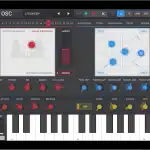
When we’re on the hunt for fresh music tech, it’s not always about the newest releases. Sometimes, it’s about revisiting the vintage gems that have shaped the soundscape of our digital age. Today, we’re dusting off a classic from 2015: Chipspeech, a vintage-style speech synthesizer crafted by Plogue.
Why resurface this tech treasure now? Because its distinctive sound and timeless charm are just as engaging and inspiring today as they were when it first hit the scene over a decade ago.Why resurface this tech-treasure now? Because its distinctive sound and timeless charm are just as engaging and inspiring today as they were eight years ago.
What is Plogue Chipspeech?
Chipspeech offers a palette of 12 distinct voices, each carrying a unique timbre. Just type in your lyrics, play on your MIDI keyboard, and let the music flow. Its intuitive layout allows you to chain sentences, loop them, shuffle them around, and much more.

Key Features: 12 Voices and Vintage Emulation
Here are some of my favorite features of Chipspeech:
- 12 Unique Voices: A dozen different voices each with their own distinctive timbre, offering a broad spectrum of sounds and styles to play with.
- Circuit Bending Emulation: Unleash the wild, chaotic sound of a circuit-bent TI speaking device in a controlled, musical context.
- Rich Presets: Once you’ve got the hang of the interface, you’ll appreciate the wealth of high-quality presets at your fingertips.
- Phonetic Mode: For more authentic-sounding vocals, this mode lets you input phonetic sounds instead of just typing in lyrics. Chipspeech uses X-SAMPA to allow for multiple language support and to avoid the limitations of other systems.
- English Pronunciation: The accuracy of the English pronunciation makes it easy to create realistic-sounding vocals.
- Sound Customization: Chipspeech is more than a synthesizer, it’s a sound design tool. Modify the sound extensively for expressive performances.
- Mono or Polyphonic: Chipspeech primarily operates in mono mode, but don’t overlook the poly mode for those vintage-sounding machine choirs.
- MIDI Control: Built with MIDI in mind, nearly everything in Chipspeech can be assigned to a MIDI CC.
- Standalone Version: Along with the usual plug-in formats, Chipspeech also comes with a standalone version that’s perfect for those DAWless jamming sessions.
The Voder and Beyond: Exploring the Engines
Chipspeech is a fascinating blend of musicality and technology that provides a nostalgic trip down memory lane for vintage tech enthusiasts. Below, we’ll dig into the various machines that inspired the voices in this software, as reported in the official Chipspeech Guide. Which one do you prefer?
Bert Gotrax
Inventor: Richard T. Gagnon
Famous for: Q-Bert, Gorf
Device: Votrax SC-01
Synthesis type: Formant (analog)
Tone: Lots of complex frequency whines and noises, due to real analog hardware. May
benefit from some EQ (especially increased bass and treble and lowered mids).
Dandy 704
Inventors: John Kelly and Carol Lochbaum
Famous for: Daisy Bell (first computer voice synthesis song)
Device: System based on an IBM 704 computerSynthesis type: Physical modelling (waveguide)
Tone: Dark and muted, many strange inflections in the vowels due to the tortuous signal
path.
Dee Klatt
Inventor: Dennis Klatt
Famous for: Stephen Hawking’s voice
Device: Dectalk
Synthesis type: Formant
Tone: Very versatile. This voice can morph all the way from husky male baritones up to
high female divas.

Lady Parsec
Inventor: Richard Wiggins & the Speak & Spell team
Famous for: Parsec (TI-99/4A game)
Device: TI-99/4A plug-in speech synthesizer module
Synthesis type: LPC10 (lattice)
Tone: Muted and warbly.
Lady Parsec HD
Inventor: The Plogue team
Device: Your computer
Synthesis type: Plogue’s “Formant Singer” technology.
Tone: Clear and “human”.

Otto Mozer
Inventor: Forrest Mozer
Famous for: Berzerk
Device: TSI
Synthesis type: Voice segment sequencing
Tone: Very bright and crunchy, this assertive voice will pierce through any mix. Its bass
range is extremely fat.
Spencer AL2
Patent holder: John E. Stork
Famous for: Intellivoice (Intellivision), Magnavox Odyssey² voice attachment
Device: SP0256-AL2 chip
Synthesis type: LPC12 (cascaded 2-poles)
Tone: Very choppy due to the limited number of voice segments and lack of interpolation.
Terminal 99
Inventor: Richard Wiggins & the Speak & Spell team
Famous for: TI-99/4A Terminal Emulator II cartridge
Device: TI-99/4A plug-in speech synthesizer module
Synthesis type: LPC10 (lattice)
Tone: Somewhat choppy.
VOSIM
Inventors: Werner Kaegi and Stan Tempelaars
Device : Standard DAC
Wikipedia: http://en.wikipedia.org/wiki/Werner_Kaegi_(composer)
Synthesis type: Windowed Oscillator Sync
Tone: Synthesizer-like.
CiderTalk’84
Inventors: Softvoice, inc.
Famous for: Apple MacInTalk and Amiga narrator.device
Synthesis type Windowed Oscillator Sync
Tone: Crunchy and somewhat lively.
Rotten.ST
Inventors: Martin Day and Andy Beveridge
Famous for: U96 – Das Boot, Quadrophonia, other early Techno
Device: Atari ST
Synthesis type: Windowed Oscillator Sync
Tone: Buzzy and aggressive.
SAM
Inventor: Softvoice, inc.
Famous for: Can you repeat the question?
Device: Any 4-bit DAC
Synthesis type: Formant synthesis.
Tone: Deep, rich and metallic with an unplaceable accent, spanning a wide range of
frequencies.
Voder
Inventor: Homer Dudley
Famous for: Being the first electro-mecanic voice synthesizer
Device: Rigorously trained human operator
Synthesis type: Filter bank synthesis
Tone: Strange resonances with unexpected surprises and weird noise, can be very muted.
Why this Chipspeech Review Matters in 2026
In an era dominated by hyper-realistic AI vocal clones, Chipspeech remains essential because it doesn’t try to sound human, it celebrates the “ghost in the machine.” Its value lies in its ability to provide texture and character that modern AI simply can’t replicate. It is a work of love and an ode to the pioneers of speech synthesis.
| Pros | Cons |
| Authentic Heritage: True-to-life emulations of 12 legendary speech chips. | Dated Interface: The UI lacks modern high-DPI scaling for 4K monitors. |
| Highly Expressive: Deep MIDI control over phonemes and inflection. | Learning Curve: The registration and setup process feels a bit “old school.” |
| Evergreen Sound: A unique timbral quality that never goes out of style. | Price Point: At approx. $/€100, it’s a dedicated investment for a niche tool. |
Final Verdict
Chipspeech is an impressively powerful and fun-to-use synthesizer, ideal for musicians and producers aiming to infuse a unique, nostalgic vocal element into their creations. While it could use a few modern touches (interface scaling, registration process, etc.), the expressiveness and inspiration it provides will swiftly eclipse any minor cosmetic concerns.
This vintage gem is well worth a spin for any sound enthusiast!
To explore more about Chipspeech, its unique voices, and their intriguing history, or to trial or purchase the plugin (currently priced at approx. $/€100), visit the product web page.
Hear it in Action
Check out this demo playlist from Bandcamp to hear the captivating sounds Chipspeech can produce
Last but not least, if you are into unique robotic voice sounds, make sure to check out our Electro Harmonix V256 Vocoder review and the recent Orange Vocoder update!