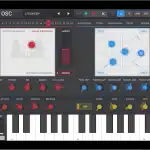
For over a decade, the Waldorf Streichfett occupied a singular, slightly eccentric corner of tabletop synth setups. I still remember testing one at a trade fair shortly after Waldorf launched it: the concept was unapologetically narrow, yet within five minutes of sweeping through that chorus-drenched ensemble section, I was hooked enough to buy one for my own studio. It excelled at one specific trick—churning out the swooshing, nostalgic string ensembles of the 1970s Solina and Eminent era without fuss. With the Waldorf Crema, the German manufacturer broadens that niche concept into a full-fledged bi-timbral pad machine, and my expectations are understandably high. Instead of strictly chasing disco-era space-rock nostalgia, Crema grafts Waldorf’s rich digital synthesis history directly onto the string ensemble framework.
Housed in a compact, coffee-toned metal chassis alongside the company’s recent Protein desktop box, the Waldorf Crema sits at the intersection of analog warmth and late-20th-century digital grit. Where massive flagships like the FPGA-powered Waldorf Kyra targeted relentless polyphony, Crema takes an intentional, streamlined approach aimed at immediate sound design. It marries the Streichfett’s divide-down string algorithms with wavetables, 4-operator FM, virtual-analog leads, and a dedicated shimmer reverb.
Two Dedicated Engines: Texture and Lines
The instrument divides its sound generation between two polyphonic engines dubbed Texture and Lines. These engines can run layered together, split across the keyboard, or addressed independently over separate MIDI channels.

Texture acts as the atmospheric backbone of the machine. It packs 12 voices of polyphony across 24 distinct sound types, split among three generation modes:
Strings: The fully polyphonic engine pulled straight from Streichfett, using a continuous control knob to morph between violin, viola, cello, brass, organ, and choir registers. Wavetable: 12-voice synthesis driven by 17 classic and modern Waldorf wavetables, invoking the digital pad heritage pioneered across instruments like Waldorf Nave, equipped with dedicated envelopes, LFOs, and modeled filtering. * FM: Six 4-operator FM algorithms tailored specifically for metallic tines, bells, synthetic woodwinds, and evolving digital chimes.
In practice, every sound type within the Texture engine routes through the iconic Streichfett bucket-brigade-style Ensemble effect, transforming sterile digital wavetables into wide, undulating soundscapes.

The second engine, Lines, serves as the melodic counterweight. Derived from Streichfett’s solo section, Lines expands into an 8-voice virtual-analog polyphonic synth. It features two detunable oscillators offering Saw and Pulse waveforms with pulse-width modulation, vibrato, and stereo tremolo. It provides the low-end bite and defined lead lines that traditional string machines routinely lack, preventing your mix from drowning in pure harmonic soup.

Organic Drift, Shimmer FX, and Performance Tools
To prevent digital pads from sounding static or sterile, Waldorf added a dedicated Flavour macro knob. Adjusting Flavour injects subtle pitch instability and wavetable position fluctuations across the voices. The effect simulates the uneven component drift of vintage divide-down hardware without requiring deep modulation matrix routing.
The effects section operates in either serial or parallel configurations across two independent stages:
FX1: Covers 14 modulation and time-based algorithms, including chorus, flanger, phaser, tremolo, drive, and stereo delay. FX2: Dedicated exclusively to reverb algorithms, highlighted by an expansive, pitch-shifted Shimmer reverb.
For live sequencing and hands-on performance, Waldorf Crema includes a 32-step sequencer and a programmable arpeggiator that syncs directly to external MIDI clock. Expressive keyboard players gain full MPE (MIDI Polyphonic Expression) compatibility, alongside support for channel aftertouch, velocity, and sustain.
Preset storage accommodates 360 memory locations, with over 130 factory presets programmed out of the box. Users can organize banks, backup patches, and manage sound libraries through the free Chutney Librarian software application.
Desktop Practicalities and Sonic Scope
Crema’s compact desktop footprint measures 252 × 170 × 48 mm and weighs 0.9 kg. Physical connectivity includes balanced stereo 6.3 mm main outputs, a 3.5 mm TRS headphone output, mini-TRS MIDI In/Out (Type A, with two 5-pin DIN breakout adapters supplied in the box), and a modern USB-C port handling both bus power and USB-MIDI.
In terms of workflow, Waldorf intentionally leans into immediacy over granular patch surgery. Rather than offering complex, multi-page menu navigation, the front panel relies on dedicated tactile knobs—such as the continuous Variation dial, ADSR envelope controls, and the Flavour macro—for fast, performance-friendly shaping. It is an instrument designed with a singular musical focus: lush pads, vintage ensembles, and evolving background beds. While producers seeking an all-around studio workhorse for aggressive bass or drum synthesis will need to look elsewhere, having 20 total voices of Waldorf wavetable and string DSP in a portable €339 desktop unit gives ambient and cinematic producers a dedicated, tactile sound source.
Pricing and Availability
The Waldorf Crema is available immediately through authorized dealers and directly from the manufacturer.
* MSRP: €339 (including VAT)
The unit ships with a USB-C cable and two 3.5 mm mini-TRS to 5-pin DIN MIDI adapters.
For complete technical specifications and audio demonstrations, visit the official Waldorf Music website.