

We walk backwards, say nothing
My visions of China
We’re young and strong in this party
We’re building our visions of China
(D. Sylvian)
Arturia’s latest release, Augmented Yangtze, is a virtual instrument that combines samples of traditional Chinese instruments with modern synthesis capabilities. Having spent some time with a pre-release version, I’m intrigued (and positively surprised) by the creative possibilities this union offers.
Sampling Meets Synthesis
At its core, Augmented Yangtze features a collection of sampled Chinese instruments, including the bass dizi, xiao, pipa, guqin, yangqin and erhu. The quality of the samples themselves is excellent, with plenty of dynamic and timbral nuance.
But, like in the previous Augmented titles, Arturia has taken things a step further by integrating these samples with four distinct synthesis engines: Virtual Analog, Granular, Wavetable, and Harmonic, plus a straightforward sample playback mode. This architecture allows for a wide range of tones, from realistic emulations to heavily processed, experimental textures.

In practice, I found this combination of acoustic sources and electronic manipulation quite inspiring. It invites you to explore the intersection between recognizable instrumental timbres and abstract, synthetic elements.
Interface and Effects
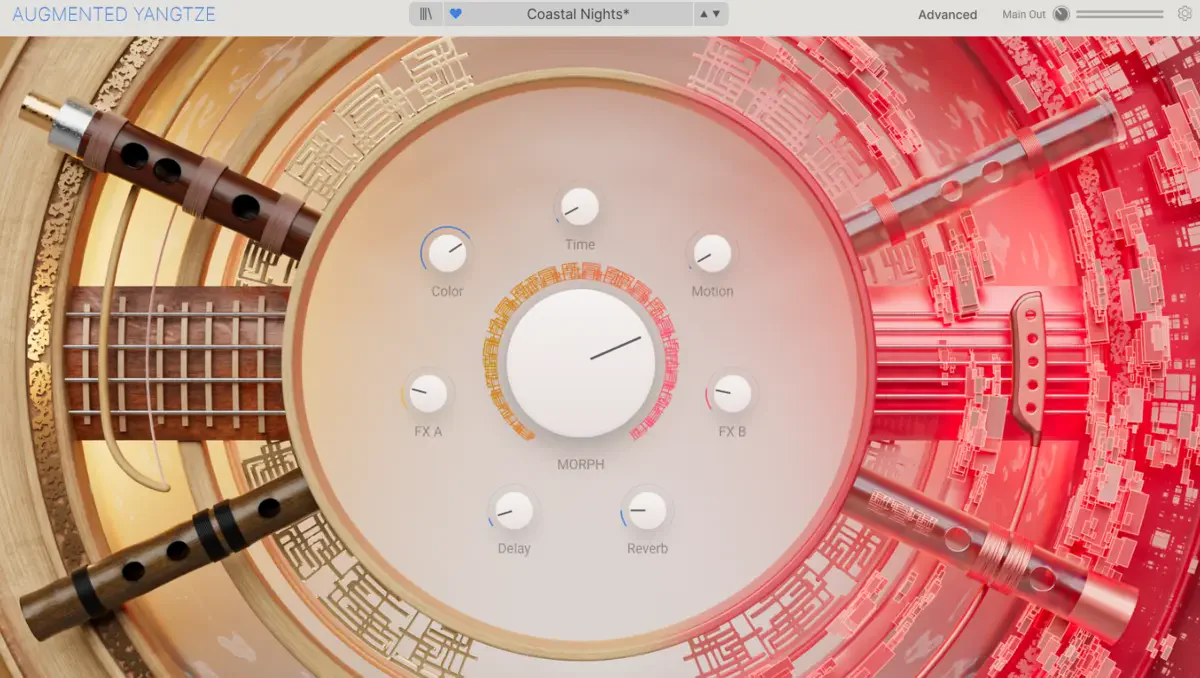
Augmented Yangtze features a dual-mode interface. The main view (see the first image above) provides a streamlined set of controls for blending the sample and synth layers, adjusting the central Morph control, and tweaking macro parameters.
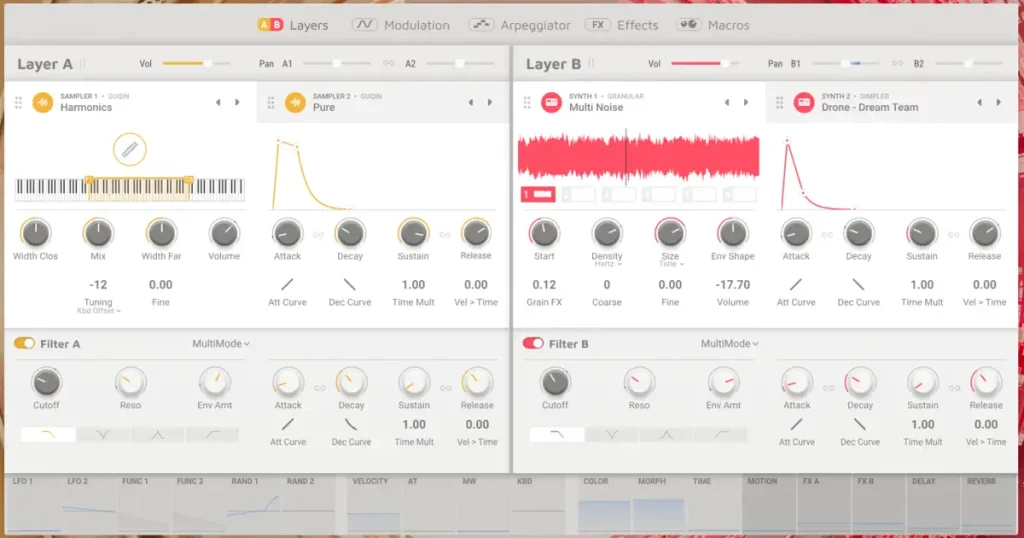
The Advanced panel reveals the sound layers, modulation matrix, envelopes, LFOs, arpeggiator, and effects.
I appreciate this balance between accessibility and depth. You can get great results from the main view, but there’s plenty to dig into for sound designers.

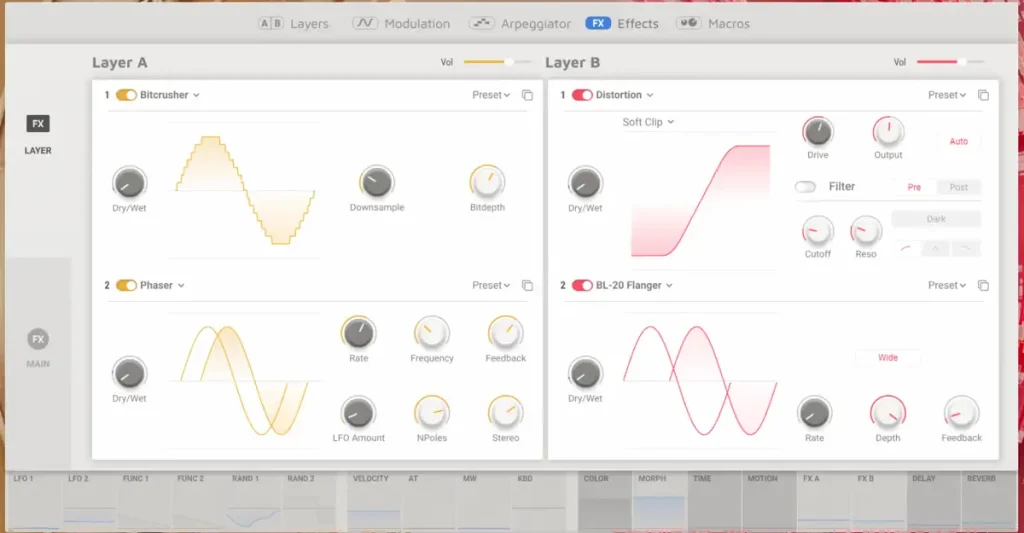
The effects section is also noteworthy, with high-quality reverb, delay, chorus, flanger, phaser, and distortion. Knowing the quality of Arturia’s effect catalog, this wasn’t exactly a surprise. In this Augmented Yangtze, these effects are well-implemented and can add polish, dirt, and everything in between to the instrument’s sounds.

Presets and Hands-On Control
Augmented Yangtze ships with a diverse and highly curated preset library of over 200 sounds, created by top designers, encompassing both traditional instrument emulations and more experimental fare. The presets showcase the range of the instrument nicely and are a great starting point for your sonic adventures. I sure “lost” a few hours just going through them!
For hands-on control, the macro knobs and faders map well to Arturia’s Keylab Essential controller (see our Arturia Keylab Essential Mk3 review), This is where the fun started for me. The 8 knobs and 8 faders let me radically alter the sound and the behavior of the presets. I’ve been able to transform apparently harmless sounds into massive ambient-friendly drones, create lo-fi variations for beat-making purposes, and more.
With the Keylab all this was easy peasy. If you have a different MIDI controller make sure to spend a few minutes mapping the most essential parameters, it’s absolutely worth it!
Broader Appeal Than Meets the Eye
At first glance, an instrument based on traditional Chinese sources might seem niche or overly specialized (or just a new age novelty) for some Western musicians. However, I believe Augmented Yangtze deserves a closer look for a few key reasons.
Firstly, the combination of high-quality sampling and advanced synthesis engines opens up creative possibilities beyond mere emulation. While you can certainly use Augmented Yangtze to add an authentic Eastern flavor to your compositions, the toolkit here is flexible enough to cater to a wide range of electronic and hybrid music production styles.
Moreover, there’s real value in expanding our sonic palettes and drawing inspiration from diverse musical traditions. In an increasingly connected world, being able to respectfully incorporate sounds and ideas from other cultures can help keep our music fresh and relevant. Instruments like Augmented Yangtze make that easier and more accessible.
So while Augmented Yangtze might initially seem like a niche product, I believe its potential audience is actually much broader. It’s a unique and well-crafted tool that can appeal to anyone looking to inject some new colors and textures into their music, regardless of genre.
Augmented Yangtze – Final Thoughts
All in all, Augmented Yangtze is a compelling new entry in Arturia’s software instrument lineup. It strikes a great balance between capturing the essence of its source material and providing ample room for creative sound design.
At a glance it might not look like your cup of tea, but it does offer a refreshing take on some less common sound sources in a package that’s both approachable and deep. If you’re looking to expand your sonic palette with some Eastern flavors and hybrid textures, it’s definitely worth a look.
Augmented Yangtze is available now for $99 (intro price; regular $149) from Arturia and PluginBoutique.