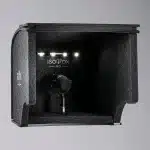
If you’re like me, you’ve probably wrestled with bulky pop filters that obscure your face on camera or foam windscreens that just don’t cut it when it comes to plosive control. Recently, I got my hands on the ISOPOP BroadCast from ISOVOX, and it’s genuinely one of the more clever designs I’ve tried. While it’s famously paired with the Shure SM7B, it actually works with a bunch of other microphones too. Here are my real-world impressions:
About the Brand
ISOVOX is a Scandinavian brand dedicated to high-quality solutions for vocal recording. They’re perhaps best known for their portable booth setups (on the subject, check out our Isovox GO review), designed to minimize unwanted room reflections and noise. Their ISOPOP BroadCast pop filter continues that focus on practical innovation, combining sleek looks with real performance benefits.

Wide Microphone Compatibility
Despite the frequent mention of the SM7B, the ISOPOP BroadCast isn’t limited to just that one mic. It attaches securely to any front-address microphone with a diameter of 1.9 cm to 6 cm (0.75″ to 2.36″), covering popular podcast and broadcast models like the Rode PodMic, Electro-Voice RE20, Shure MV7, and more. I tested it on my Rode PodMic and had zero issues with fit or performance.
Here’s a compatibility list, for reference:

- Shure SM7B and SM7dB
- Rode PodMic and ProCaster
- Electro-Voice RE20
- Shure MV7
- Sennheiser MKH 416
- Universal Audio SD-1
- AEA KU5A
- PreSonus PD-70
Installation & Shock Mount
Attaching this filter is pretty straightforward. You thread a couple of small rubber bands into notches on the sides of its metal ring, then stretch one around the rear part of your mic. It might feel a bit fiddly the first time, but once it’s on there, it’s rock-solid. It also has an integrated shock mount, which helps cut down on handling noise.

Two Interchangeable Filters
ISOPOP provides two interchangeable filter inserts:
- Neutral Filter – Built for clarity and faithful sound reproduction.
- De-Ess Filter – Focuses on taming harsh sibilance without dulling your vocals too much.
Switching filters takes a few seconds. I’ll usually run the Neutral Filter for day-to-day setups, but when I’m working with people who have a more pronounced “ess” in their speech, I’ll pop in the De-Ess Filter. Works like a charm.
Performance & Sound
Nobody wants popping “P’s” messing up their audio. I ran a classic “Peter Piper” test, and the BroadCast came through clean. It also handled my breathing and mouth noises very well. Compared to a basic foam windscreen, I didn’t detect any real loss in high-frequency clarity, which is often a concern with thicker filters.
A Clear View (Literally)
For those who do a lot of on-camera work, the ISOPOP BroadCast’s compact form factor is a breath of fresh air. You stay visible to your audience while still getting the plosive protection you need. Definitely a win if you do YouTube videos, livestreams, or host interview-style podcasts.

Hygienic & Easy to Clean
Traditional foam windscreens can get funky over time. The ISOPOP BroadCast’s filters don’t absorb moisture, so you can rinse them off and let them dry in no time. Great for multi-user environments like shared podcast studios. No one wants to share germs along with the mic.
Pricing & Where to Buy
The ISOPOP BroadCast currently retails for USD $99 or EUR €89. If you want more details, you can check out the official product page at this link. It’s also available from Thomann for those who prefer ordering through a music retailer.
Final Thoughts
All in all, the ISOPOP BroadCast handles its job with style. It’s not the cheapest pop filter around, but if you’re serious about producing top-quality audio while staying camera-friendly, it’s worth a look. Between the easy cleanup, interchangeable filters, and strong compatibility range, it checks all the right boxes for me. And yes, it works with way more than just the SM7B—so if you’re eyeing a different mic on your desk, this filter might be your new best friend.