

Yum Audio has just expanded its plugin lineup with Ember, a new (and their first) virtual synthesizer that promises to deliver rich, characterful sounds with an intuitive approach to sound design. This fresh addition to the software synthesis world focuses on bringing analog warmth and personality to modern production workflows.
A Different Take on Analog Emulation
At its core, Ember is designed to be a “vibe machine,” moving beyond mere analog emulation to create sounds with distinctive character. The synthesizer’s architecture combines modern clarity with vintage grit, allowing producers to craft everything from pristine contemporary tones to raw, soul-infused textures.

Streamlined Interface, Powerful Control
Master Control System
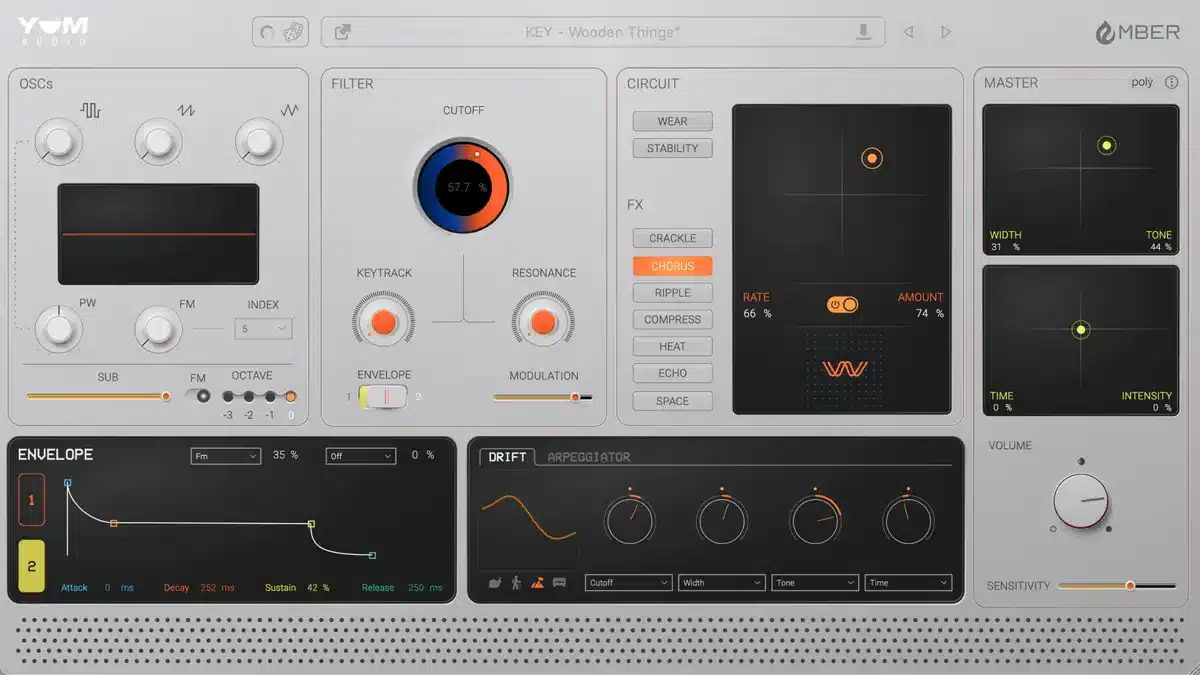
The interface adopts a refreshingly straightforward approach, featuring a set of master controls that simultaneously affect multiple parameters. This innovative design allows users to shape envelope timing, effects, and circuit intensity with single movements, making sound design both intuitive and efficient.
Dynamic Evolution
A standout feature is the Drift section, which introduces subtle movement across various parameters, including the master controls. This creates evolving, dynamic sounds that feel organic and alive, adding depth to even the simplest patches.
Integrated Effects Suite
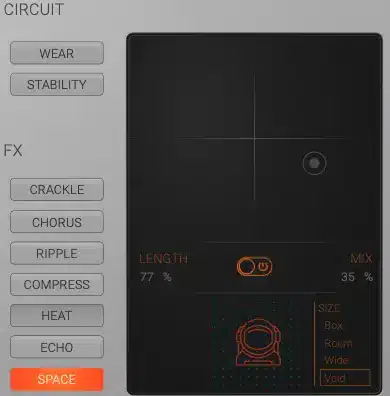
Ember comes equipped with a comprehensive effects section that includes:

- Crackle
- Ripple
- Chorus
- Compress
- Heat
- Echo
- Space
These effects (not surprisingly, considering Yum Audio’s expertise in the field) are specifically tuned to complement the synthesizer’s oscillator engine, delivering mix-ready sounds without the need for external processing. Speaking of which, hey guys, how about a standalone version?
Hands-On Experience
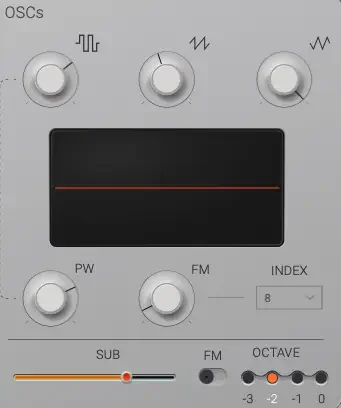
After spending some quality time with it, Ember reveals itself as a focused synthesizer that excels through simplicity and character rather than complexity. The straightforward scene structure, built around three oscillators and an extensive effects section, creates a workflow that feels immediately accessible.

To me, Ember fits in the more creative-experimental-lofi side of synth design. Don’t expect a Moog clone or a bread-and-butter Rompler kind of thing.
Core Architecture
The basic sound engine, while not breaking new ground, provides a solid foundation through its three-oscillator setup with square, saw, and triangle waveforms, complemented by a sub-oscillator for added depth. The real magic happens when signals flow through the Circuit and FX sections, where Ember truly comes alive.
Effects as Sound Design Tools
The effects suite proves to be Ember’s secret weapon. The combination of Crackle, Ripple, Chorus, Compress, Heat, Echo, and Space transforms even simple patches into rich, characterful sounds. This approach might feel limiting to sound designers seeking deep modulation options, but it excels at delivering immediate, musical results.
Preset Library and Workflow
The extensive preset library showcases Ember’s strengths effectively, covering arps, bass, brass, keys, leads, pads, and plucks. Deconstructing these presets reveals a thoughtful approach to sound design that makes the most of the plugin’s architecture. The randomization feature, with its varying “spice levels,” adds an element of creative surprise to the sound design process.
Interface and Future Potential
The clean, ergonomic interface deserves praise for its immediate accessibility. However, as an initial release, there’s room for improvement. Future updates could benefit from:
- Enhanced modulation options (currently a bit limited)
- Improved visual contrast
- Better usability (effect state buttons, etc.)
Looking Forward
Considering this is Yum Audio’s first venture into synthesis, Ember shows remarkable polish. The company’s track record with audio processing tools suggests we can expect meaningful updates that will expand the synthesizer’s capabilities while maintaining its streamlined workflow.
Pricing and Availability
Ember is available now at an introductory price of $129. While some users might find this a little steep given the straightforward approach amd architecture of the synth, the 14-day full trial allows thorough evaluation before purchase.
To me, the plugin’s strength lies not in comprehensive sound design capabilities but in its ability to deliver fresh, character-rich sounds with minimal effort. Time’s money, right?
2024 turned out to be an exciting year for software synth lovers who love experimenting with sound. Between Yum Audio’s Ember, Sumu by Madrona Labs, the recent Tela by Fors, Dawesome’s Myth and Arturia’s Pigmentt 5 (to name a few), there’s certainly no shortage of incredibly inspiring virtual instruments. Now it’s up to you!